
The History of Viticulture on the Moselle
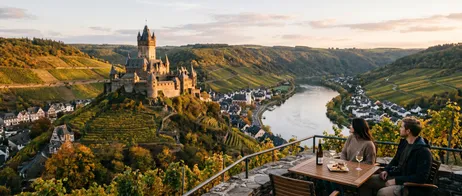
The Moselle captivates with Riesling, steep-slope viticulture and a long winegrowing tradition along picturesque terraced vineyards.
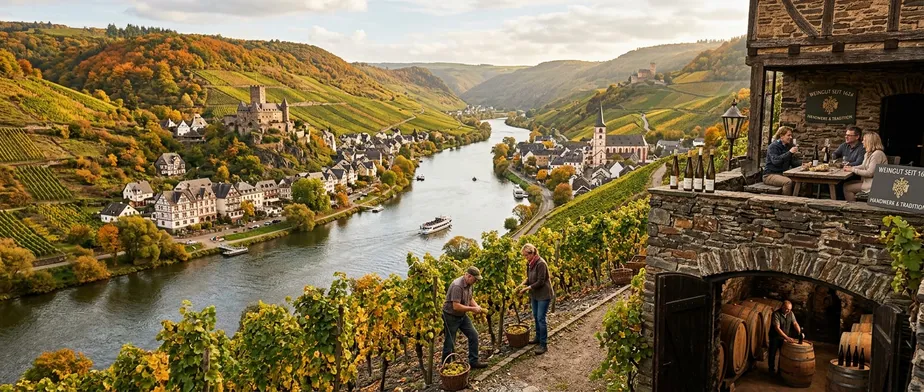
The Moselle is one of Europe’s best known wine landscapes. Anyone travelling through the valley quickly understands what makes it so special. Steep slopes, tight river bends, historic villages and densely planted vineyards shape the view. Yet the region impresses with more than its scenery. Winegrowing on the Moselle is the result of a long development in which nature, craftsmanship and culture have grown closely together.
Wine has been cultivated along the Moselle for many centuries. From the very beginning, natural conditions played a key role. The slopes by the river receive plenty of sun, while the Moselle itself moderates the climate. On top of this come the steep sites, where the vines are tended with great effort and often worked by hand. It is precisely this interplay of landscape and labour that gives Moselle winegrowing its distinctive character.
A cultural landscape shaped over centuries
Viticulture has had a lasting impact on the Moselle valley both economically and culturally. Over generations a landscape has emerged that is almost impossible to imagine without its vines. Terraced vineyards, historic cellars, monasteries, castles and half-timbered towns tell the story of a region where wine is far more than an agricultural product. It is part of everyday life, of history and of how many people see themselves.
This becomes especially visible in the villages and towns along the river. In many places, vineyards stretch up the slopes directly above the old centres. Barrels and bottles are stored in the cellars, while wines are tasted on squares and terraces. In this way, history does not remain abstract but can be experienced directly on site.
Steep slopes as a symbol of experience and perseverance
Winegrowing on the Moselle is inseparable from its famous steep slopes. They are among the region’s most striking features. At the same time, cultivation there is particularly demanding. Machines can only be used to a limited extent in many locations, which is why experience, care and manual work still shape everyday life.
These conditions have given rise to a wine culture of its own. Winegrowers work in step with the seasons, harvest the grapes with great precision and preserve techniques that have been passed down over long periods of time. This is a key part of the region’s appeal. The wine speaks not only of grape varieties and soils, but also of dedication and commitment.
Historic places and a living wine culture
Anyone who wants to understand the history of viticulture on the Moselle should not only look at the vineyards but also at the places themselves. Old wine cellars, monastic complexes and manor houses show how important wine has been over the centuries. Many of these buildings recall that winegrowing here has always been linked to storage, trade and hospitality.
This tradition is still alive today. In many towns and villages, wineries open their courtyards and cellars to visitors. Tastings, conversations with winegrowers and festivals centred on wine make Moselle wine culture tangible. Past and present meet here in a very natural way.
Why the Moselle continues to fascinate
The Moselle is more than a wine region. It is a cultural landscape that has grown over time and developed a character all its own. Within a small area, nature, history and enjoyment come together. Anyone who explores winegrowing on the Moselle discovers a region that draws strength from its traditions and, in doing so, feels timeless.
This is exactly what makes it so appealing to travellers. Between vineyards, river scenery and historic sites, it becomes clear how closely origin and craftsmanship are linked. The history of viticulture on the Moselle is therefore not only a look back, but also an invitation to experience this region with all your senses.
More articles

Wine and Cheese: Perfect Pairings from the Moselle Region
Which Moselle wines go well with cheese? Discover pairings with Riesling, Elbling and Pinot varieties, plus tips for relaxed wine and cheese evenings at home.
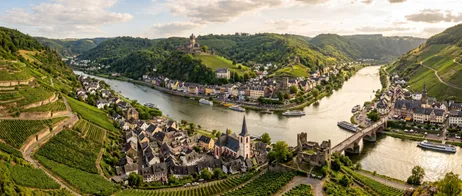
Discover the Most Beautiful Towns on the Moselle
The Moselle enchants with Cochem, Bernkastel-Kues, Traben-Trarbach and historic old towns full of wine, culture and charm.
11 Things That Make You Happy on the Moselle
What makes the Moselle so special? These 11 small and big moments show why a break between vineyards, the river and half-timbered towns feels so good.
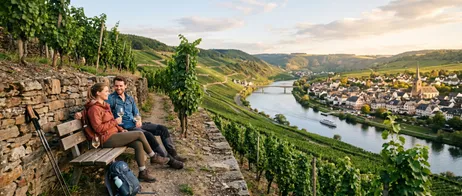
Experience Wine and Hiking on the Moselle in a Relaxed Way
Discover the Moselle on foot and with all your senses: between vineyards, viewpoints and villages, the region combines hiking and wine culture in an ideal way.
Experience Castles and Palaces on the Moselle
The Moselle captivates visitors with castles, palaces and historic cultural monuments set along Germany’s picturesque wine region.

The Most Beautiful Castles and Palaces on the Moselle
Castles and palaces along the Moselle shape the character of the region. Discover why these historic buildings rank among the most impressive sights in the Moselle Valley.
