Wintrich: Sustainable Tourism on the Moselle
Sustainable holidays in Wintrich: holiday home on the Moselle, renewable energy, regional cuisine, eco-friendly mobility and close-to-nature experiences.
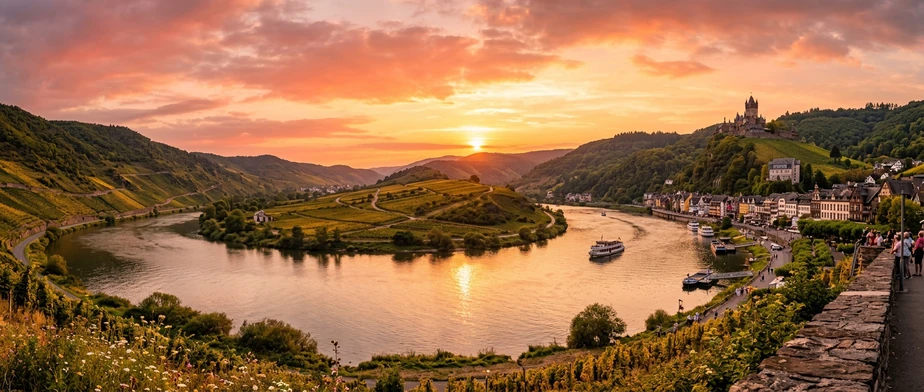
Between steep vineyards, the gently curving river and historic winegrowers’ estates, Wintrich is sending a clear signal: this village of around 1,000 inhabitants is seen as a pioneer in sustainability.
Elsewhere along the Moselle, winegrowing and tourism traditionally take centre stage. Wintrich combines both with ecological responsibility. The village shows that holidays and environmental protection do not have to be in conflict. In fact, they complement each other in an ideal way.
Energy from wind power – out of sight, but highly effective
Wintrich’s claim to be the “most sustainable municipality on the Moselle” is far more than a marketing line. The village covers all of its electricity needs from renewable sources, specifically from wind power. High up in the forested hillsides, far from the view of visitors, the turbines of the wind farm turn. From the valley, the technology remains invisible and the landscape retains its quiet, undisturbed charm.
For guests, Wintrich looks like a classic Moselle village with vineyards and half-timbered houses, while in the background clean energy is generated to supply every household and business. The wind farm is considered a key project for Wintrich’s sustainable development. It marked the starting point for anchoring environmental protection firmly in the village’s identity.
From there, a whole series of initiatives has emerged, ranging from sustainable mobility and ecological building projects to a new form of tourism that consciously follows the principle of conserving resources. Wintrich has proven that even a small municipality can have a big impact through clear decisions.
Car-free holidays – relaxed and climate-friendly
Anyone renting a holiday home on the Moselle in Wintrich can safely leave their car key in their pocket. Getting there by public transport is straightforward. Buses run regularly to the village from Trier and Traben-Trarbach.
On site, the tourist information office focuses on a dense network of services so visitors can explore the region in comfort and with a low carbon footprint. Guests staying at the motorhome site and in selected accommodations receive a free local transport ticket. This allows them to use the bus routes along the Moselle at no extra cost – an easy way to visit towns, castles and wine villages without a car.
This offer is complemented by well-developed cycling and hiking trails that pass directly through Wintrich. A particularly visible symbol of the sustainable approach is the sky-blue “ride-sharing bench” in the centre of the village. Anyone sitting there signals that they are looking for a lift, whether towards the Hunsrück hills or to the next village along.
This simple system works surprisingly well and brings locals and visitors together. It is a small but effective example of community spirit and sustainable mobility.
Regional cuisine and short supply chains
The ecological approach is perhaps most tangible at the table. Wintrich has developed a lively food scene that values regional ingredients, short transport routes and seasonal dishes. One flagship project is the hotel and restaurant run by Markus Plein.
There, vegetables do not just come from nearby fields but from the hotel’s own garden. In the courtyard, tomatoes, courgettes and herbs thrive and are picked fresh for the guests’ plates. A greenhouse ensures a supply of fresh produce all year round. The kitchen combines culinary finesse with a consistently sustainable approach.
A photovoltaic system on the roof provides clean electricity, and even the soap for guests is made in-house. Sustainability, however, is not limited to the Plein hotel. The village shop also impresses with a selection of regional products, from potatoes and eggs to honey from Wintrich beehives and jams made from local fruit.
Visitors wanting to take a piece of the Moselle home with them will find handmade items in Katherine Schmitt’s gift shop. Socks, placemats and small accessories are all crafted on site. The shop has long since become a popular meeting place for holidaymakers looking for distinctive souvenirs.
Active holidays with a sustainable focus
Many visitors arrive by bike or use one during their stay to discover the Moselle region. Whether following the river or climbing up through the vineyards to the “Großer Herrgott” viewpoint, Wintrich is an ideal base for car-free tours. Hiking trails lead through forests and vineyards where the careful balance between nature and tourism is especially clear.
Challenges and new projects
Despite its many successes, Wintrich still faces challenges. One example is the large motorhome site. With 90 pitches it offers an attractive option for travellers, yet electricity consumption is high because power is included in the flat-rate fee. Mayor Dennis Binz is therefore working to install individual meters to encourage more economical use.
Further projects are planned for the future. E-bike rental stations, charging points for electric cars and sustainable building methods are intended to reduce the village’s ecological footprint even further. The revenue from wind power helps to fund these initiatives.
Holidays with a clear conscience
Wintrich offers a convincing example of how a small village can take on a leading role. Anyone spending their holiday on the Moselle here benefits from regional cuisine, sustainable mobility and an awareness of environmental responsibility. At the same time, the classic Moselle charm remains intact, with wine villages, half-timbered houses and cosy wine taverns.
More articles
Discover the Most Beautiful Towns on the Moselle
The Moselle enchants with Cochem, Bernkastel-Kues, Traben-Trarbach and historic old towns full of wine, culture and charm.
The History of Viticulture on the Moselle
The Moselle captivates with Riesling, steep-slope viticulture and a long winegrowing tradition along picturesque terraced vineyards.
The Most Beautiful Castles and Palaces on the Moselle
Castles and palaces along the Moselle shape the character of the region. Discover why these historic buildings rank among the most impressive sights in the Moselle Valley.
Discover Popular Holiday Regions along the Moselle
Discover popular holiday regions along the Moselle and learn what makes a break between vineyards, river valleys and charming towns so special
Where the Rhine and Moselle Meet: The Deutsches Eck in Koblenz
The Deutsches Eck in Koblenz is one of the most famous places on the Rhine and Moselle. Find out what makes this square with its Kaiser Wilhelm monument, panoramic views and history so special.
Buying a House on the Moselle: What Really Matters
Thinking about buying a house on the Moselle? This article explains what to look for in terms of use, location, condition, costs and planning in this popular holiday region.
