
Grape Varieties on Mosel, Saar & Ruwer: Riesling and More
Discover the key grape varieties on the Mosel, Saar and Ruwer – from Riesling to Pinot Noir. Origins, taste profiles and distinctive features at a glance.
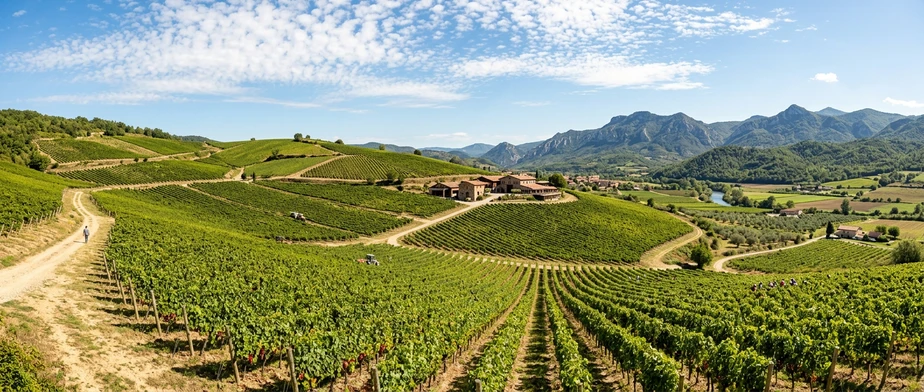
The Mosel, Saar and Ruwer are renowned for outstanding white wines, most of them made from the region’s key grape variety: Riesling. With 62 percent of the total vineyard area, Riesling clearly dominates this winegrowing region.
In the Saar and Ruwertal subregions its share is even higher, at an impressive 83 and 88 percent of vineyard area respectively. Riesling is perfectly suited to the slate-covered steep slopes along the river valleys of Mosel, Saar and Ruwer. Here it produces wines with mineral, finely fruity and elegant aromas that are also known for their longevity.
Alongside Riesling, Müller-Thurgau, Pinot Blanc, Pinot Noir and the regional specialty Elbling are other important grape varieties in this wine region.
Riesling is the most important grape variety in the Mosel, Saar and Ruwer wine region. With 62.2 percent of the vineyard area and 5,413 hectares, it holds the top position. The “queen of white grapes” has been cultivated here since the Middle Ages. Thanks to its very late ripening phase it yields mineral, finely fruity, elegant and long-lived wines.
Riesling is versatile and suitable for every level of sweetness and quality, from dry top wines to noble sweet ice wines. It pairs very well with spicy dishes and intense sauces, aromatic cheeses, desserts and other specialities.
With increasing bottle age, sweet Mosel Rieslings also match rich dishes such as foie gras or game particularly well.
MÜLLER-THURGAU – also called Rivaner; 9.8 percent of vineyard area / 851 hectares
This crossing of Riesling and Madeleine Royale, also known as Rivaner, is the second most important grape variety in the Mosel-Saar-Ruwer region. Its mild acidity and typical muscat-like bouquet result in fruity and herbal wines that can be vinified dry or off-dry. They are ideal summer wines and go very well with light cuisine.
Elbling, a white variety that once grew across Germany, is now cultivated mainly on the Mosel. With 5.5 percent of the vineyard area (478 hectares), it ranks among the most important grapes of the region.
Wines made from Elbling are known for freshness and lightness. They are an excellent match for fish and seafood, but also for a hearty vintner’s snack.
A special feature of this variety is that both white and red Elbling grapes can appear on the same vine, the result of a natural mutation. Red Elbling is often harvested separately and made into rosé wine or sparkling wine. Under wine law, however, red Elbling is still classified as white wine.
The Pinot Blanc grape variety, also known as Weißer Burgunder, accounts for 4.2 percent of the vineyard area on the Mosel, Saar and Ruwer.
The wines from this mutation of Pinot Noir are noted for smoothness, elegance and power. They can be produced as light summer wines or as fuller-bodied styles and pair well with dishes such as asparagus, poultry, fish or shellfish.
Over the past 20 years, Pinot Blanc has become one of the most important grape varieties in this region alongside Riesling and is in high demand. The same is true of Pinot Gris (2.4%, 211 ha), which also enjoys very strong demand.
Pinot Noir, known in German as Blauer Spätburgunder, is one of the most noble red wine grapes in the world and, with 4.7 percent of the vineyard area (410 hectares), holds an important place in the Mosel-Saar-Ruwer region.
The grapes produce fruity, elegant and complex red wines that thrive especially well on the limestone soils of the Upper Mosel and on slate. In the late 1980s many growers rediscovered the Mosel’s old red wine tradition, and today numerous interesting Pinot Noir wines are aged in barriques.
These red wines pair beautifully with aromatic and hearty dishes such as beef or game.
More articles
Discover Grape Varieties on the Mosel, Saar and Ruwer
Which grape varieties shape the Mosel, Saar and Ruwer? An overview of Riesling, Elbling, Müller-Thurgau and Burgundy varieties and their typical character.
Discover Mosel Wines: Top Wineries and Tasting Tips
Discover Mosel wines: top wineries, Riesling recommendations and tasting tips – enjoyment and knowledge for wine lovers.
Discover the Most Beautiful Towns on the Moselle
The Moselle enchants with Cochem, Bernkastel-Kues, Traben-Trarbach and historic old towns full of wine, culture and charm.
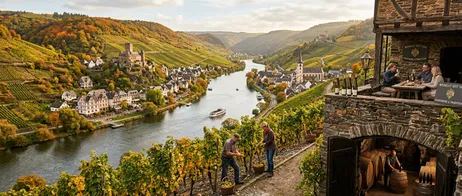
The History of Viticulture on the Moselle
The Moselle captivates with Riesling, steep-slope viticulture and a long winegrowing tradition along picturesque terraced vineyards.
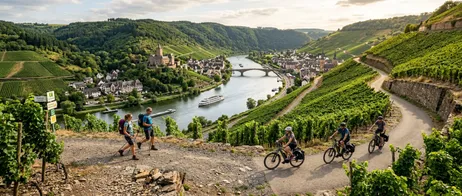
Hiking and Cycling on the Moselsteig: The Most Beautiful Stages
Discover the most beautiful stages on the Moselsteig: ideas for hikes and cycling tours along vineyards, viewpoints, castles and historic towns on the Moselle.

The Most Beautiful Castles and Palaces on the Moselle
Castles and palaces along the Moselle shape the character of the region. Discover why these historic buildings rank among the most impressive sights in the Moselle Valley.
